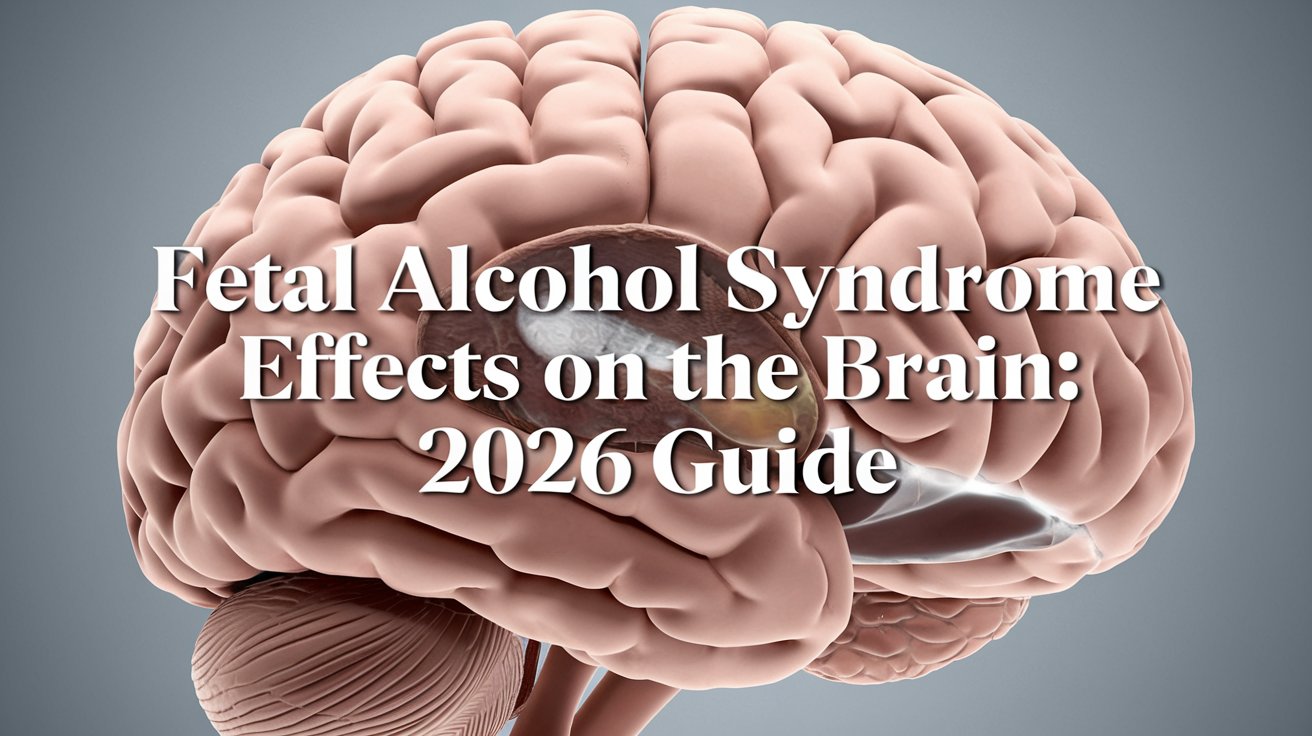
Fetal alcohol syndrome (FASD) represents one of the most preventable causes of brain damage in children across the United States. When a pregnant woman consumes alcohol, it crosses the placenta and directly impacts the developing fetal brain, causing structural abnormalities, functional impairments, and lifelong cognitive challenges. Understanding the specific effects of fetal alcohol syndrome on the brain helps families, healthcare providers, and educators provide appropriate support for affected individuals throughout their lives.
How Alcohol Damages the Developing Fetal Brain
Alcohol consumption during pregnancy interferes with critical neurodevelopmental processes at every gestational stage. The developing fetal brain lacks the enzymes necessary to metabolize alcohol effectively, making it particularly vulnerable to ethanol toxicity. Research from 2026 demonstrates that even minimal alcohol exposure during pregnancy can disrupt neuronal migration, synapse formation, and myelination processes essential for proper brain development. The timing of alcohol exposure determines which brain regions sustain the most significant damage, with the first trimester being particularly critical for structural formation.
The mechanisms of alcohol-induced brain damage involve multiple pathways including oxidative stress, disrupted cell signaling, and impaired growth factor production. Alcohol triggers apoptosis in developing neurons, reduces the production of neurotrophic factors necessary for cell survival, and interferes with glial cell development. Studies conducted at major research institutions in 2026 show that these disruptions result in permanent alterations to brain architecture, affecting approximately 40,000 infants born annually in the United States with some form of FASD brain damage.
Structural Brain Abnormalities in FASD
Advanced neuroimaging techniques in 2026 reveal consistent patterns of structural brain abnormalities in individuals with fetal alcohol syndrome. These changes affect both overall brain volume and specific regional structures critical for cognitive and behavioral function.
Reduced Brain Volume and Cortical Thickness
Magnetic resonance imaging (MRI) studies consistently demonstrate that children with FASD brain damage have significantly reduced total brain volumes compared to typically developing peers. The reduction averages between 8-12% in total brain volume, with particularly pronounced effects in the cerebral cortex. Cortical thickness measurements show widespread thinning across multiple brain regions, especially in the frontal and parietal lobes responsible for executive function and sensory integration. These structural changes correlate directly with the severity of prenatal alcohol exposure and persist throughout adolescence and adulthood.
The corpus callosum, which connects the brain’s two hemispheres, shows marked abnormalities in FASD patients. This structure may be thinner, displaced, or partially absent in severe cases, leading to impaired interhemispheric communication. Research from 2026 indicates that corpus callosum abnormalities contribute significantly to the cognitive deficits and behavioral challenges observed in fetal alcohol syndrome, affecting approximately 75% of diagnosed individuals in clinical studies across the United States.
Hippocampus and Basal Ganglia Alterations
The hippocampus, essential for memory formation and learning, demonstrates consistent volume reductions in individuals with fetal alcohol syndrome. MRI studies from 2026 reveal that hippocampal volumes may be reduced by 10-15% compared to controls, directly impacting the ability to form new memories and recall information. The basal ganglia, particularly the caudate nucleus, also shows significant structural abnormalities that contribute to motor control difficulties and problems with habit formation and procedural learning.
These subcortical structures play crucial roles in reward processing, motivation, and executive function. The structural damage to the basal ganglia helps explain why children with FASD often struggle with impulse control, emotional regulation, and goal-directed behavior. Current research indicates that these brain regions remain vulnerable throughout pregnancy, with third-trimester exposure particularly affecting the caudate and putamen development in the developing child.
Cerebellar Abnormalities and Coordination Issues
The cerebellum sustains significant damage from prenatal alcohol exposure, resulting in both structural abnormalities and functional impairments. Children with fetal alcohol syndrome frequently display reduced cerebellar volumes, particularly in the anterior vermis region. These changes contribute to the characteristic motor coordination difficulties, balance problems, and fine motor skill deficits observed in FASD patients. The cerebellum also plays important roles in cognitive functions including attention, language processing, and social cognition, making these structural changes particularly consequential.
Advanced imaging techniques in 2026 reveal that cerebellar damage affects approximately 80% of individuals with diagnosed fetal alcohol syndrome. The severity of cerebellar abnormalities correlates with the degree of prenatal alcohol exposure and predicts outcomes in motor function, academic achievement, and adaptive behavior. These findings emphasize the widespread effects of fetal alcohol syndrome on the brain beyond traditionally recognized areas, impacting multiple systems essential for daily functioning and quality of life.
White Matter Disruption and Connectivity Problems
Diffusion tensor imaging (DTI) studies conducted in 2026 reveal extensive white matter abnormalities in individuals with fetal alcohol syndrome. White matter consists of myelinated nerve fibers that enable communication between different brain regions. Children with FASD brain damage show reduced white matter integrity, altered fiber tract organization, and decreased connectivity between crucial brain networks. These structural changes manifest as slower processing speeds, difficulty integrating information from multiple sources, and challenges with complex cognitive tasks requiring coordination across brain regions.
The corpus callosum, anterior commissure, and major white matter tracts including the superior longitudinal fasciculus demonstrate consistent abnormalities in FASD patients. Fractional anisotropy measurements, which indicate white matter organization quality, are significantly reduced throughout the brain. Research from major medical centers across the United States shows that these white matter disruptions contribute substantially to the cognitive profile of fetal alcohol syndrome, affecting academic performance, social functioning, and adaptive behavior skills. The extent of white matter damage often predicts long-term outcomes more accurately than cortical abnormalities alone.
Functional Brain Impairments in FASD
Beyond structural changes, fetal alcohol syndrome causes significant functional brain impairments that affect cognitive performance, behavior regulation, and daily adaptive skills. Functional MRI (fMRI) studies reveal altered patterns of brain activation during cognitive tasks, indicating that even when brain regions appear structurally intact, they may not function normally.
Executive Function and Working Memory Deficits
Executive functions, which include planning, organization, impulse control, and flexible thinking, are consistently impaired in individuals with fetal alcohol syndrome. Neuroimaging studies from 2026 show abnormal activation patterns in the prefrontal cortex during executive function tasks. Children with FASD brain damage struggle with working memory tasks, showing reduced activation in the dorsolateral prefrontal cortex and parietal regions that typically support these cognitive processes. These deficits impact academic achievement, with affected children averaging 2-3 grade levels behind peers in mathematics and reading comprehension.
Working memory capacity, essential for holding and manipulating information temporarily, is significantly reduced in FASD patients. Functional imaging reveals that affected individuals recruit additional brain regions to compensate for inefficient neural processing, suggesting their brains work harder to achieve similar results. The cognitive deficits in executive function and working memory persist into adulthood, affecting employment, independent living skills, and social relationships. Current data indicates that approximately 90% of adults with diagnosed fetal alcohol syndrome require some level of ongoing support for daily living activities.
Attention and Inhibitory Control Problems
Attention deficits represent one of the most common functional impairments in children with fetal alcohol syndrome, affecting 60-95% of diagnosed individuals. Brain imaging studies reveal altered activation in attention networks including the anterior cingulate cortex, prefrontal regions, and parietal cortex. Children with FASD brain damage show difficulty sustaining attention, filtering distractions, and shifting attention appropriately between tasks. These challenges frequently result in misdiagnosis as attention deficit hyperactivity disorder (ADHD), though the underlying neural mechanisms differ.
Inhibitory control, the ability to suppress inappropriate responses and resist distractions, is particularly impaired in fetal alcohol syndrome. Functional MRI studies demonstrate reduced activation in the right inferior frontal gyrus and pre-supplementary motor area during inhibitory control tasks. This brain dysfunction contributes to impulsive behavior, difficulty following rules, and problems with emotional regulation. Research from 2026 indicates that these inhibitory control deficits place individuals with FASD at higher risk for substance abuse, legal problems, and mental health disorders, with rates of secondary disabilities reaching 60-70% in adolescence and adulthood.
Learning and Memory Impairments
Memory systems sustain significant damage from prenatal alcohol exposure, affecting both the acquisition of new information and the retrieval of previously learned material. Individuals with fetal alcohol syndrome demonstrate particular difficulty with verbal learning and memory tasks, showing reduced activation in the hippocampus and medial temporal lobe structures during encoding and retrieval. These learning impairments impact academic achievement across all subject areas, with mathematics and reading comprehension being especially challenging due to their reliance on building upon previously learned concepts.
Procedural memory and motor learning also show impairments related to cerebellar and basal ganglia damage. Children with FASD require more repetitions to learn new motor skills and show less efficient consolidation of learned behaviors. Recognition memory typically performs better than recall memory, suggesting that retrieval processes are particularly vulnerable to alcohol-induced brain damage. Educational interventions designed for children with fetal alcohol syndrome in 2026 emphasize repetition, multi-sensory learning approaches, and explicit memory strategies to compensate for these neurological deficits.
Social Cognition and Emotional Regulation Deficits
The effects of fetal alcohol syndrome on the brain extend significantly into social and emotional functioning. Neuroimaging research demonstrates abnormalities in the limbic system, including the amygdala and orbitofrontal cortex, which are essential for processing social information and regulating emotional responses. Children with FASD brain damage struggle with recognizing facial expressions, understanding social cues, and interpreting others’ intentions and emotions. These deficits contribute to social isolation, inappropriate social behavior, and vulnerability to manipulation or exploitation.
Emotional regulation challenges affect approximately 85% of individuals with fetal alcohol syndrome, manifesting as mood lability, difficulty managing frustration, and inappropriate emotional responses. Functional imaging studies reveal altered connectivity between the prefrontal cortex and amygdala, disrupting the neural circuits that typically modulate emotional reactions. These emotional and behavioral problems often intensify during adolescence, increasing risks for anxiety disorders, depression, and behavioral disorders. Treatment approaches in 2026 emphasize teaching explicit emotion recognition skills, providing structured environments, and implementing behavioral interventions that account for the underlying neurological basis of these challenges.
FASD Brain Damage Compared to Normal Brain Development
Comparing FASD brain vs normal brain development reveals the profound impact of prenatal alcohol exposure. In typical development, the brain undergoes organized processes of neurogenesis, migration, differentiation, and synapse formation following precise temporal sequences. The fetal alcohol syndrome brain shows disruptions at multiple developmental stages, resulting in permanently altered architecture. Normal brains achieve peak synaptic density during early childhood followed by strategic pruning, while FASD brains may have reduced initial synapse formation and disrupted pruning processes.
Structural comparisons using MRI technology demonstrate that individuals with fetal alcohol syndrome have noticeably smaller overall brain volumes, disproportionate reductions in specific regions, and altered shapes of key structures. The normal brain shows smooth, coordinated development of gray and white matter through adolescence, while the FASD brain exhibits persistent deficits in both tissue types. Growth trajectories differ substantially, with affected individuals showing less brain growth during childhood and adolescence. These differences remain detectable throughout life, with adult neuroimaging studies in 2026 confirming that the structural and functional abnormalities of fetal alcohol syndrome represent permanent alterations rather than developmental delays that might resolve over time.
Recognizing Fetal Alcohol Syndrome in Children and Adults
Identifying fetal alcohol syndrome symptoms requires understanding both physical characteristics and neurodevelopmental signs. The classic fetal alcohol syndrome face includes distinctive features such as a smooth philtrum (the groove between nose and upper lip), thin upper lip, and small eye openings. However, only about 10% of individuals with prenatal alcohol exposure show the full facial phenotype, making diagnosis challenging. Healthcare providers in 2026 use comprehensive assessment protocols that evaluate growth patterns, facial features, and neurodevelopmental functioning to identify affected individuals.
Beyond facial features, signs of fetal alcohol syndrome include growth deficiencies, with affected children typically falling below the 10th percentile for height and weight. Microcephaly (small head circumference) occurs in approximately 70% of cases with full fetal alcohol syndrome. The neurodevelopmental signs encompass cognitive delays, learning disabilities, attention problems, and behavioral challenges that become increasingly apparent as children enter school. Early identification is crucial, as children diagnosed before age six who receive appropriate interventions show significantly better outcomes in adaptive functioning, academic achievement, and social skills compared to those diagnosed later in childhood or adolescence.
Fetal Alcohol Syndrome Behavior Patterns Across the Lifespan
Characteristic fetal alcohol syndrome behavior patterns emerge in early childhood and evolve throughout life. Young children with FASD often display hyperactivity, impulsivity, and difficulty with transitions or changes in routine. The underlying brain damage affecting executive function and emotional regulation manifests as tantrums, aggression, and problems following directions. School-age children struggle with peer relationships due to social cognition deficits, showing poor judgment about social boundaries and difficulty learning from social mistakes. Academic challenges become pronounced, with particular difficulties in mathematics, reading comprehension, and abstract reasoning.
Adolescents and adults with fetal alcohol syndrome face increased risks for secondary disabilities including mental health disorders, substance abuse, and involvement with the legal system. Research from 2026 indicates that 60% of adolescents with FASD experience disrupted school experiences, 60% have trouble with the law, and 50% are confined in detention, prison, or psychiatric facilities at some point. The behavioral challenges in adults include difficulty maintaining employment, managing finances, and living independently. However, appropriate support systems, structured environments, and understanding of the neurological basis for these behaviors significantly improve outcomes. Adults diagnosed with fetal alcohol syndrome who receive targeted interventions show better adaptive functioning and quality of life.
Alcohol Exposure Thresholds and Brain Damage Risk
A frequently asked question concerns how much wine can cause fetal alcohol syndrome and whether any amount of alcohol is safe during pregnancy. Current medical consensus in 2026 maintains that no safe threshold for alcohol consumption during pregnancy has been established. Even small amounts of alcohol can potentially cause brain damage, with effects depending on timing, pattern of drinking, maternal metabolism, and genetic factors. The Surgeon General and American College of Obstetricians and Gynecologists recommend complete abstinence from alcohol during pregnancy and when planning pregnancy.
Studies demonstrate that binge drinking (consuming 4-5 drinks on one occasion) poses particularly high risks for fetal brain damage, even if occurring infrequently. However, consistent moderate drinking or even light drinking may also result in cognitive and behavioral effects. The developing fetal brain is vulnerable throughout pregnancy, with different brain regions showing peak vulnerability at different gestational stages. First-trimester exposure affects structural brain formation, second-trimester exposure impacts neuronal migration and organization, and third-trimester exposure disrupts synapse formation and brain growth. Given these risks and the absence of a proven safe threshold, medical professionals advise that avoiding all alcohol represents the only risk-free approach to preventing fetal alcohol syndrome.
Treatment and Management of FASD Brain Effects
While the brain damage from fetal alcohol syndrome is permanent, evidence-based interventions can significantly improve functioning and quality of life. Fetal alcohol syndrome treatment in 2026 emphasizes early diagnosis, comprehensive assessment, and individualized intervention plans addressing specific neurological deficits. Medical management includes treating co-occurring conditions such as ADHD, anxiety, and sleep disorders that commonly accompany FASD. Medication may help manage attention problems and hyperactivity, though response rates differ from typical ADHD due to underlying differences in brain structure and function.
Educational interventions tailored to the cognitive profile of fetal alcohol syndrome show the most effectiveness. These approaches include reducing environmental stimulation, providing consistent routines, breaking tasks into small steps, and using concrete rather than abstract instruction. Cognitive rehabilitation programs targeting specific deficits in executive function, memory, and social cognition demonstrate positive outcomes. Behavioral interventions emphasizing positive reinforcement, clear expectations, and teaching compensatory strategies help individuals develop skills for managing their challenges. Family support and education are crucial, as caregivers who understand the neurological basis of FASD behaviors can implement more effective parenting strategies and advocate for appropriate services in educational and community settings.
Living with FASD: Prognosis and Quality of Life
The question can a child with FASD live a normal life reflects understandable concerns about long-term outcomes. While the neurological effects of fetal alcohol syndrome are permanent, many individuals with FASD can lead fulfilling lives with appropriate support and interventions. Success depends significantly on early diagnosis (before age six), stable and nurturing home environments, access to appropriate educational services, and avoidance of violence or neglect. Individuals who receive these protective factors show substantially better outcomes in adaptive behavior, academic achievement, and independent living skills.
Research from 2026 indicates that adults with fetal alcohol syndrome experience variable outcomes ranging from requiring comprehensive support for daily living to achieving significant independence with targeted assistance. Approximately 20-30% of adults with FASD achieve relatively independent living with occasional support, 40-50% require moderate ongoing assistance with finances, healthcare, and decision-making, and 20-30% need comprehensive daily support. Employment rates remain lower than the general population, with many adults benefiting from supported employment programs that provide job coaching and workplace accommodations. Quality of life improves significantly when communities, employers, and service systems understand the neurological basis of FASD and implement appropriate accommodations rather than expecting affected individuals to function without support.
Related video about effects of fetal alcohol syndrome on the brain
This video complements the article information with a practical visual demonstration.
Everything you need to know about effects of fetal alcohol syndrome on the brain
What are the most visible signs of fetal alcohol syndrome in children?
The most recognizable signs of fetal alcohol syndrome include characteristic facial features such as a smooth philtrum, thin upper lip, and small eye openings. However, only about 10% of affected individuals display the full facial phenotype. Other important signs include growth deficiencies (height and weight below the 10th percentile), microcephaly (small head circumference), developmental delays, learning disabilities, hyperactivity, attention problems, and difficulty with social interactions. Behavioral signs become more apparent as children enter school and include problems following directions, poor impulse control, memory difficulties, and challenges with abstract reasoning. Early identification through comprehensive assessment enables timely intervention that significantly improves long-term outcomes.
How does FASD brain damage differ from a normal brain?
The FASD brain vs normal brain shows multiple significant differences in structure and function. FASD brains have 8-12% smaller overall volume, reduced cortical thickness especially in frontal and parietal regions, and abnormalities in the corpus callosum connecting the brain’s hemispheres. The hippocampus (memory center) and basal ganglia (motor control and executive function) show consistent volume reductions. White matter, which connects different brain regions, demonstrates reduced integrity and organization. Functionally, FASD brains show altered activation patterns during cognitive tasks, requiring more effort to achieve similar results as typical brains. These structural and functional differences are permanent alterations rather than developmental delays, persisting throughout life and contributing to the cognitive, behavioral, and social challenges characteristic of fetal alcohol syndrome.
Can adults with fetal alcohol syndrome live independently?
Independence levels vary considerably among adults with fetal alcohol syndrome based on severity of brain damage, early intervention, and support systems. Current data from 2026 shows approximately 20-30% of adults with FASD achieve relatively independent living with occasional support, 40-50% require moderate ongoing assistance with finances, healthcare decisions, and daily planning, while 20-30% need comprehensive daily support. Success factors include early diagnosis (before age six), stable home environments during childhood, appropriate educational services, and absence of violence or abuse. Adults with FASD benefit from supported employment programs, assistance with financial management, help navigating healthcare and legal systems, and understanding communities that provide appropriate accommodations. While the neurological effects are permanent, targeted support enables many individuals to lead fulfilling lives and contribute meaningfully to their communities.
What specific behaviors indicate fetal alcohol syndrome?
Characteristic fetal alcohol syndrome behavior patterns include hyperactivity and impulsivity that exceed typical ADHD, difficulty with transitions and changes in routine, poor impulse control leading to inappropriate social interactions, problems learning from consequences, memory difficulties requiring frequent repetition of instructions, emotional regulation challenges with rapid mood changes, poor judgment particularly in social situations, and difficulty understanding cause-and-effect relationships. Children often struggle with peer relationships due to social cognition deficits and show inappropriate boundaries. Academic challenges are pronounced, particularly in mathematics and reading comprehension. Adolescents and adults face increased risks for secondary disabilities including mental health disorders (affecting 90% of individuals), substance abuse problems, legal difficulties (60% have trouble with law), and challenges maintaining employment. Understanding these behaviors as neurologically-based rather than willful defiance is crucial for implementing effective interventions and support strategies.
Is any amount of alcohol safe during pregnancy?
No safe threshold for alcohol consumption during pregnancy has been established as of 2026. Medical organizations including the Surgeon General and American College of Obstetricians and Gynecologists recommend complete abstinence from alcohol when pregnant or planning pregnancy. Even small amounts of alcohol can potentially cause fetal brain damage, with effects varying based on timing of exposure, drinking pattern, maternal metabolism, and genetic factors. Binge drinking poses particularly high risks, but consistent moderate or even light drinking may result in cognitive and behavioral effects. The developing fetal brain remains vulnerable throughout all nine months, with different regions showing peak vulnerability at different stages. First-trimester exposure primarily affects structural brain formation, second-trimester impacts neuronal organization, and third-trimester disrupts synapse formation. Given these risks and absence of proven safe levels, avoiding all alcohol represents the only risk-free approach to preventing fetal alcohol syndrome and protecting optimal brain development.
How is fetal alcohol syndrome diagnosed in adults?
Diagnosing fetal alcohol syndrome in adults presents unique challenges since the characteristic facial features may be less pronounced and documented prenatal alcohol exposure is often unavailable. Comprehensive assessment includes detailed developmental history, neurocognitive testing measuring executive function, memory, processing speed, and adaptive behavior skills. Brain imaging using MRI may reveal structural abnormalities consistent with FASD including reduced brain volume, corpus callosum abnormalities, and decreased white matter integrity. Healthcare providers evaluate the pattern of cognitive strengths and weaknesses, with FASD typically showing particular difficulties in executive function, working memory, and social cognition despite potentially average IQ scores. Adults may present with histories of academic struggles, employment difficulties, legal problems, substance abuse, or mental health disorders. A confirmed or suspected history of maternal alcohol consumption during pregnancy, combined with characteristic neurocognitive and behavioral patterns, supports diagnosis. Many adults with FASD symptoms were never diagnosed in childhood, and obtaining a diagnosis in adulthood can provide important explanations for lifelong challenges and access to appropriate support services.
| Brain Region Affected | Structural Changes | Functional Impact |
|---|---|---|
| Cerebral Cortex | 8-12% volume reduction, decreased cortical thickness in frontal and parietal lobes | Executive function deficits, planning difficulties, impaired abstract reasoning |
| Corpus Callosum | Thinning, displacement, or partial absence; reduced connectivity | Poor interhemispheric communication, slower processing speed, integration problems |
| Hippocampus | 10-15% volume reduction in memory formation center | Learning difficulties, memory formation impairments, recall problems |
| Basal Ganglia | Caudate nucleus abnormalities, reduced subcortical volumes | Motor control issues, impulse control deficits, emotional regulation problems |
| Cerebellum | Reduced volume especially anterior vermis, affects 80% of FASD cases | Coordination difficulties, balance problems, attention and language challenges |
| White Matter | Decreased integrity, altered fiber organization, reduced connectivity | Slower processing, information integration difficulties, communication problems |