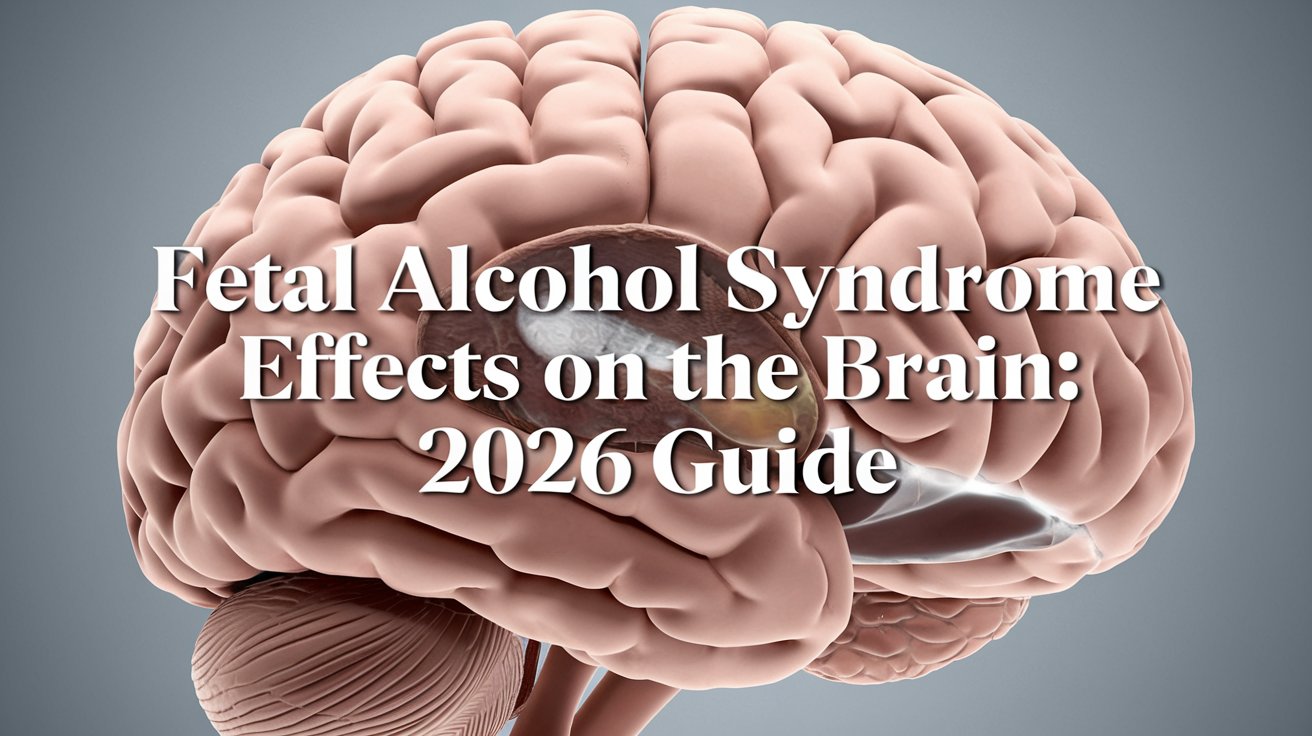
Fetal alcohol syndrome (FAS) affects children across multiple developmental domains, causing permanent brain damage, distinctive facial features, and lifelong behavioral challenges. In the United States, approximately 1 in 100 children are born with fetal alcohol spectrum disorders (FASD) annually, making it the leading preventable cause of intellectual disabilities. Understanding how fetal alcohol syndrome affects children helps parents, educators, and healthcare providers implement appropriate interventions and support systems to improve outcomes for affected individuals.
Understanding Fetal Alcohol Syndrome and Its Impact on Children
Fetal alcohol syndrome represents the most severe manifestation within the fetal alcohol spectrum disorders continuum, occurring when pregnant women consume alcohol that directly impacts fetal brain development. The Centers for Disease Control and Prevention (CDC) estimates that as of 2026, between 2.5 to 5 percent of first-grade children in certain U.S. communities display characteristics of FASD. The syndrome develops because alcohol crosses the placenta freely, exposing the developing fetus to the same blood alcohol concentration as the mother, but the fetus metabolizes alcohol much more slowly.
The impact of prenatal alcohol exposure varies significantly based on timing, quantity, and frequency of maternal alcohol consumption. First-trimester exposure particularly affects facial feature development and structural brain formation, while second and third-trimester exposure predominantly impacts brain function and growth parameters. Children with fetal alcohol syndrome experience a constellation of physical abnormalities, neurodevelopmental deficits, and behavioral challenges that persist throughout their lives, requiring comprehensive multidisciplinary interventions and family support systems.
Physical and Facial Characteristics of Fetal Alcohol Syndrome
The distinctive fetal alcohol syndrome face includes three primary features that clinicians use for diagnosis: short palpebral fissures (small eye openings measuring less than the 10th percentile), a smooth philtrum (the vertical groove between nose and upper lip), and a thin upper lip. These facial characteristics become more subtle as children age, making early diagnosis critical. Approximately 70 percent of children with confirmed FAS display these classic facial features during childhood, though the severity varies considerably among affected individuals.
Beyond facial abnormalities, children with fetal alcohol syndrome commonly experience growth deficiencies including low birth weight, failure to thrive, and persistent height and weight measurements below the 10th percentile. As of 2026 research data, approximately 80 percent of children diagnosed with FAS demonstrate prenatal or postnatal growth retardation. Microcephaly, characterized by a smaller than normal head circumference, affects roughly 50 percent of children with the syndrome, directly correlating with reduced brain volume and associated cognitive impairments that become more apparent with age.
Cognitive and Intellectual Developmental Delays
Children affected by fetal alcohol syndrome experience significant cognitive impairments that profoundly impact academic achievement and daily functioning. Intelligence quotient (IQ) scores typically range between 55 and 85, with an average around 70, placing most affected individuals in the borderline to mild intellectual disability range. However, approximately 25 percent of children with FASD maintain IQ scores within the normal range but still demonstrate specific learning disabilities in mathematics, reading comprehension, and executive functioning tasks.
Memory deficits represent one of the most challenging symptoms for affected children, particularly involving working memory and long-term memory consolidation. These children struggle to retain multi-step instructions, remember consequences of actions, and transfer learned information to new situations. Attention deficits occur in approximately 60 to 95 percent of children with fetal alcohol syndrome, frequently meeting diagnostic criteria for Attention Deficit Hyperactivity Disorder (ADHD). Processing speed delays affect their ability to respond quickly to environmental demands, requiring extended time accommodations in educational settings throughout their academic careers.
Behavioral and Emotional Challenges in Children with FASD
Fetal alcohol syndrome behavior patterns include impulsivity, poor judgment, difficulty understanding consequences, and inadequate social boundaries that create significant challenges in home, school, and community environments. Research from 2026 indicates that approximately 90 percent of children with FASD experience some form of mental health condition during childhood or adolescence. The most common comorbid conditions include ADHD, oppositional defiant disorder, conduct disorder, anxiety disorders, and depression, requiring comprehensive behavioral health interventions tailored to their unique neurodevelopmental profile.
Child behavior difficulties often intensify during adolescence when social expectations increase and abstract reasoning becomes more essential for success. These children frequently struggle with emotional regulation, displaying sudden mood swings, frustration intolerance, and difficulty recovering from emotional distress. Social skills deficits manifest as inappropriate social approaches, inability to read social cues, poor peer relationships, and vulnerability to exploitation by others. Approximately 60 percent of adolescents with fetal alcohol syndrome experience disrupted school experiences including suspensions, expulsions, or dropping out, necessitating specialized educational programming and behavioral supports.
What Does It Feel Like to Have FASD from a Child’s Perspective
Understanding what it feels like to have FASD helps caregivers and professionals develop empathy and appropriate support strategies. Affected individuals describe experiencing constant overwhelm in situations that others navigate easily, comparing sensory experiences to being bombarded by simultaneous stimuli without the ability to filter or prioritize information. Executive function challenges create a sensation of being perpetually unprepared, forgetting important details despite genuine effort, and feeling frustrated when others perceive their struggles as laziness or defiance rather than neurological limitations.
Many children with fetal alcohol syndrome report feeling different from peers without understanding why social interactions remain consistently difficult despite repeated attempts to fit in. The gap between chronological age and developmental age creates internal confusion and external misunderstandings, as these children may appear capable in some domains while struggling significantly in others. Memory difficulties create anxiety about forgetting important information, while impulsivity leads to regret over actions taken without adequate forethought. This internal experience highlights the importance of environmental modifications, external supports, and patient, consistent guidance rather than punishment-based approaches that fail to address the neurological basis of their challenges.
Diagnostic Process and Assessment Criteria
Diagnosing fetal alcohol syndrome requires comprehensive evaluation by experienced clinicians familiar with the spectrum of prenatal alcohol effects. The revised Institute of Medicine criteria from 2025 specify requirements across four diagnostic categories: confirmed prenatal alcohol exposure (when documented), characteristic facial features, growth deficits, and central nervous system abnormalities. However, confirmed maternal alcohol consumption is not mandatory for diagnosis if the child presents with sufficient physical and neurodevelopmental features consistent with prenatal alcohol exposure.
The assessment process typically involves multidisciplinary evaluation including pediatric examination, genetic testing to rule out similar conditions, neurocognitive testing, behavioral assessment, and developmental history review. Neuropsychological testing evaluates intellectual functioning, academic achievement, executive functions, memory, attention, language skills, visual-spatial abilities, and motor coordination. Brain imaging studies using MRI technology reveal structural abnormalities in approximately 80 percent of individuals with confirmed FAS, showing reduced brain volume, corpus callosum abnormalities, and altered cortical thickness. Early diagnosis proves critical, as children identified before age six and placed in stable, nurturing environments demonstrate significantly better outcomes than those diagnosed later in childhood.
How to Treat FASD in Children: Evidence-Based Interventions
While no cure exists for fetal alcohol syndrome, numerous evidence-based interventions help treat associated symptoms and improve functional outcomes. The cornerstone of effective treatment involves early intervention services beginning in infancy, including developmental therapies addressing motor delays, speech and language therapy targeting communication deficits, and occupational therapy improving sensory integration and daily living skills. As of 2026, the American Academy of Pediatrics recommends comprehensive care coordination ensuring that families access appropriate medical, educational, and community resources tailored to each child‘s specific needs.
Medication management addresses comorbid conditions including ADHD medications (stimulants or non-stimulants) improving attention and reducing impulsivity in approximately 70 percent of children with FASD, antidepressants managing mood disorders, and anti-anxiety medications reducing anxiety symptoms. Behavioral interventions employing structured environments, consistent routines, concrete communication strategies, and positive reinforcement systems prove more effective than punishment-based approaches. Parent training programs teach caregivers to implement FASD-informed parenting strategies including simplifying instructions, providing external memory supports, supervising activities closely, and advocating effectively within educational and healthcare systems. Research demonstrates that children receiving comprehensive interventions before age six show significantly improved adaptive functioning compared to those receiving standard care alone.
Educational Supports and Academic Accommodations
Children with fetal alcohol syndrome require specialized educational programming addressing their unique learning profile characterized by inconsistent performance, memory deficits, and difficulty with abstract concepts. Most affected children qualify for special education services under the Individuals with Disabilities Education Act (IDEA) categories of Other Health Impairment, Intellectual Disability, or Multiple Disabilities. Individualized Education Programs (IEPs) should incorporate accommodations including extended time for assignments and tests, reduced workload, preferential seating minimizing distractions, concrete visual supports supplementing verbal instructions, and frequent breaks maintaining attention and reducing overwhelm.
Effective instructional strategies emphasize hands-on learning experiences, repetition and over-learning of essential concepts, breaking complex tasks into smaller sequential steps, and immediate feedback reinforcing correct responses. Mathematics instruction particularly benefits from concrete manipulatives and real-world applications rather than abstract symbol manipulation. Reading comprehension improves with explicit instruction in decoding strategies, vocabulary development through multiple exposures, and graphic organizers supporting text understanding. Executive function supports including visual schedules, checklists, timers, and organizational systems help these children manage academic demands more independently. Transition planning beginning in middle school prepares adolescents with FASD for post-secondary education, vocational training, or supported employment based on individual strengths and limitations.
Long-Term Outcomes and Life Expectancy with FASD
Understanding how long people live with FASD involves recognizing that life expectancy varies considerably based on syndrome severity, access to interventions, and presence of protective factors. Individuals with complete fetal alcohol syndrome face increased mortality risk throughout life, with average life expectancy reduced by approximately 15 to 20 years compared to the general population. The leading causes of premature death include accidents related to impulsivity and poor judgment, suicide associated with mental health conditions, and health complications from substance abuse disorders affecting 40 to 60 percent of individuals with FASD by adulthood.
However, appropriate supports significantly improve long-term outcomes and potentially extend life expectancy closer to normal ranges. Research tracking individuals with FASD into adulthood reveals that protective factors including diagnosis before age six, stable and nurturing home environments, absence of violence exposure, qualification for disability services, and appropriate educational programming substantially reduce secondary disabilities. Adults with fetal alcohol syndrome commonly require ongoing support with independent living skills, employment assistance, financial management, healthcare coordination, and legal advocacy. Approximately 80 percent of adults with FASD cannot live completely independently, requiring varying levels of supervision and support throughout their lives.
Fetal Alcohol Syndrome Symptoms Throughout Development
Symptoms of fetal alcohol syndrome manifest differently across developmental stages, requiring age-appropriate recognition and intervention strategies. During infancy, affected babies display feeding difficulties, irritability, sleep disturbances, tremors, and poor weight gain despite adequate caloric intake. Developmental milestones including sitting, crawling, walking, and first words typically occur later than expected, with motor delays particularly prominent. Approximately 50 percent of infants with FAS demonstrate sensory processing difficulties manifesting as over-responsivity to sounds, textures, or visual stimuli, or under-responsivity requiring intense stimulation to generate appropriate responses.
Toddler and preschool years reveal emerging cognitive and behavioral challenges including language delays affecting both receptive and expressive communication, difficulty following multi-step directions, limited pretend play skills, and behavioral dysregulation with frequent tantrums exceeding typical developmental expectations. School-age children display academic struggles particularly in mathematics and reading comprehension, social skills deficits resulting in peer rejection, and increasing behavioral problems as environmental demands exceed their adaptive capacities. Adolescent symptoms include intensified mental health conditions, risky behaviors, school failure or dropout, legal problems, and substance abuse experimentation. Adult manifestations involve chronic unemployment or underemployment, dependent living situations, continued mental health challenges, and increased vulnerability to victimization due to impaired judgment and social naivety.
Fetal Alcohol Syndrome in Adults: Long-Term Challenges
Fetal alcohol syndrome adults continue experiencing significant challenges across multiple life domains despite childhood interventions and supports. Cognitive impairments persist into adulthood, with executive function deficits particularly limiting independent functioning in areas requiring planning, organization, decision-making, and problem-solving. Approximately 70 percent of adults with FASD require assistance managing finances, with many experiencing exploitation, poverty, and homelessness without appropriate support systems. Employment rates remain low, with less than 30 percent maintaining competitive employment, and those who do work typically require job coaching, simplified tasks, and supportive supervision.
Mental health conditions frequently worsen during adulthood as support systems diminish following high school graduation and the protective structure of educational environments disappears. Depression affects approximately 50 percent of adults with fetal alcohol syndrome, while anxiety disorders occur in 30 to 40 percent, often inadequately treated due to healthcare access barriers and medication management challenges. Legal problems affect approximately 60 percent of adults with FASD, frequently involving repeated minor offenses related to impulsivity, poor judgment, and failure to learn from consequences rather than criminal intent. The facial features become less distinctive in adults, sometimes delaying appropriate diagnosis and support services that could mitigate these challenges and improve quality of life throughout the adult years.
Prevention Strategies and Public Health Approaches
Preventing fetal alcohol syndrome requires comprehensive public health strategies addressing alcohol consumption during pregnancy and preconception periods. The U.S. Surgeon General recommends complete alcohol abstinence during pregnancy and when planning pregnancy, as no safe amount, type, or timing of alcohol consumption during pregnancy has been established. Public awareness campaigns in 2026 emphasize that alcohol affects fetal development throughout pregnancy, with different systems vulnerable during different gestational periods. Approximately 10 percent of pregnant women in the United States report alcohol consumption during pregnancy, with 3 percent reporting binge drinking episodes.
Healthcare providers play critical roles in prevention through universal alcohol screening during prenatal care visits, brief interventions for women reporting alcohol use, and referrals to substance abuse treatment programs when indicated. Contraceptive counseling for women with alcohol use disorders prevents unintended pregnancies at high risk for prenatal alcohol exposure. Community-based interventions targeting women of childbearing age include education about alcohol’s effects on fetal development, screening and intervention programs in primary care settings, and accessible substance abuse treatment programs addressing barriers including childcare, transportation, and stigma. School-based prevention programs educating adolescents about FASD before reproductive years potentially reduce future cases by establishing knowledge and attitudes supporting pregnancy abstinence.
Related video about how does fetal alcohol syndrome affect children
This video complements the article information with a practical visual demonstration.
Frequently Asked Questions
What impact does fetal alcohol syndrome have on a child’s development?
Fetal alcohol syndrome profoundly impacts children across physical, cognitive, and behavioral domains. Physically, affected children display distinctive facial features, growth deficiencies, and microcephaly. Cognitively, they experience intellectual disabilities with average IQ scores around 70, memory deficits, attention problems, and learning disabilities affecting academic achievement. Behaviorally, approximately 90 percent develop mental health conditions including ADHD, anxiety, and depression. These impacts persist throughout life, requiring ongoing supports and interventions. Early diagnosis and comprehensive services significantly improve long-term outcomes and adaptive functioning.
How long do people live with FASD?
People with fetal alcohol syndrome typically have reduced life expectancy by 15 to 20 years compared to the general population, though this varies based on syndrome severity and available supports. Premature mortality results from accidents related to impulsivity and poor judgment, suicide associated with untreated mental health conditions, and complications from substance abuse affecting 40 to 60 percent of individuals with FASD. However, protective factors including early diagnosis, stable environments, appropriate interventions, and ongoing support services significantly improve life expectancy and quality of life throughout adulthood.
How do you treat FASD in children effectively?
Effective treatment for children with FASD involves comprehensive, multidisciplinary interventions rather than a single cure. Evidence-based approaches include early intervention services addressing developmental delays, speech and occupational therapies, medication management for comorbid conditions like ADHD affecting 60 to 95 percent of affected children, and behavioral interventions using structured environments and positive reinforcement. Specialized educational programming with appropriate accommodations, parent training in FASD-informed strategies, and care coordination ensuring access to necessary services all improve functional outcomes. Children receiving comprehensive interventions before age six demonstrate significantly better long-term adaptive functioning.
What does it feel like to have FASD from the individual’s perspective?
Individuals with FASD describe experiencing constant overwhelm from simultaneous sensory stimuli without the ability to filter information effectively. They report feeling perpetually unprepared due to memory difficulties despite genuine effort, and frustrated when others perceive their struggles as laziness rather than neurological limitations. Social interactions remain consistently difficult, creating feelings of being different without understanding why peer relationships fail repeatedly. The gap between chronological age and developmental age creates internal confusion and external misunderstandings. Many describe anxiety about forgetting important information and regret over impulsive actions taken without adequate forethought, highlighting the neurological rather than behavioral basis of their challenges.
What are the distinctive facial features of fetal alcohol syndrome?
The fetal alcohol syndrome face includes three primary diagnostic features: short palpebral fissures (small eye openings measuring below the 10th percentile), a smooth philtrum lacking the normal vertical groove between nose and upper lip, and a thin upper lip. Approximately 70 percent of children with confirmed FAS display these classic facial characteristics during childhood, though severity varies among individuals. These features become more subtle as children age into adolescence and adulthood, making early childhood diagnosis particularly important. Additional features may include epicanthal folds, ptosis, and midface hypoplasia contributing to the distinctive appearance.
Can children with fetal alcohol syndrome attend regular schools?
Many children with fetal alcohol syndrome attend regular schools with appropriate special education services and accommodations, though some require specialized educational settings. Most qualify for Individualized Education Programs (IEPs) under IDEA providing supports including extended time, reduced workload, preferential seating, concrete visual supports, and frequent breaks. Effective strategies emphasize hands-on learning, repetition, breaking tasks into smaller steps, and executive function supports like visual schedules and checklists. Approximately 60 percent experience school disruptions including suspensions or dropping out without adequate supports, making appropriate accommodations and FASD-informed educational approaches essential for academic success and high school completion.
| FASD Impact Area | Specific Effects on Children | Evidence-Based Support Strategies |
|---|---|---|
| Physical Development | Distinctive facial features, growth deficiencies below 10th percentile, microcephaly in 50% of cases | Early intervention services, nutritional support, regular growth monitoring, medical management |
| Cognitive Functioning | Average IQ around 70, memory deficits, attention problems in 60-95%, processing speed delays | Specialized education with IEP, cognitive training, external memory supports, extended time accommodations |
| Behavioral Health | Mental health conditions in 90%, impulsivity, poor judgment, social skills deficits | Behavioral therapy, medication management, structured environments, positive reinforcement systems |
| Academic Achievement | Learning disabilities in math and reading, difficulty with abstract concepts, school disruptions in 60% | Hands-on learning, concrete visual supports, breaking tasks into steps, executive function aids |
| Long-term Outcomes | Life expectancy reduced 15-20 years, 80% require lifelong support, employment challenges | Early diagnosis before age 6, stable nurturing environment, ongoing support services, transition planning |